Freezer Meal Starter Kit: 10 Meals in One Afternoon
What’s in this guide
A freezer full of meals is one of those projects that goes well on the day and badly afterwards. The cooking is straightforward. What decides whether any of it gets eaten is four habits, and three of them take place after the food is already made.
The one that matters most is portioning. Freeze a family-sized batch and you have made one meal that requires a day’s notice. Freeze it in the size you will actually eat and you have made four.
What freezes and what does not
Worth knowing before you plan, because it removes about half the disappointments.
Anything saucy freezes well: chilli, dal, curry, bolognese, stew, soup. So do raw marinated proteins, which thaw into something better than they went in as. So do most bakes before they are baked.
What does not: anything with a crisp texture you cared about, most cream sauces, potatoes in liquid, and salad leaves for obvious reasons. Cooked pasta goes soft, which is why a pasta bake freezes best assembled and unbaked.
The prompt
Rule two is what makes it one afternoon
Ten unrelated meals is ten recipes, ten sets of ingredients and a shopping trip that costs more than a month of normal ones. It is also a seven-hour afternoon.
Ten meals built from five or six core ingredients is one large shop, a lot of the same chopping done once, and two big pots doing most of the work. Mince, onions, tinned tomatoes, beans, rice and a bag of frozen vegetables will produce eight genuinely different dinners if you ask them to.
The four habits
Cool it fully first
Freezing warm food forms large ice crystals, and large ice crystals are why a reheated portion is watery. Get it to room temperature first, then freeze. It also stops the freezer working hard against you and partly thawing everything around it.
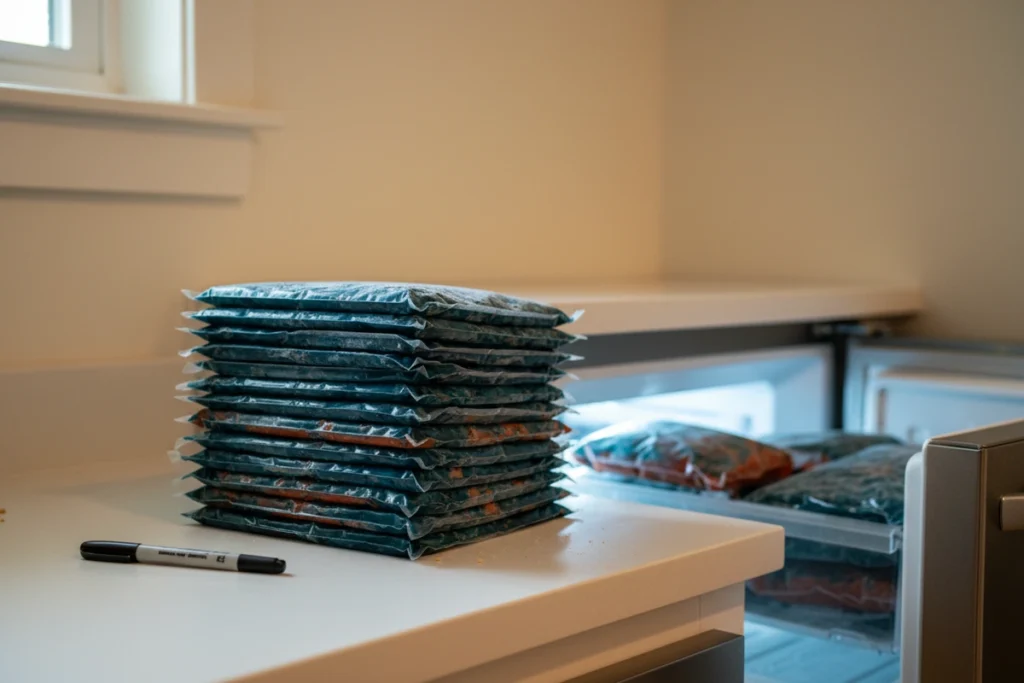
Freeze flat, stack like files
A bag frozen flat takes half the space of a tub and thaws in a fraction of the time, because it is thin. Stacked upright they can be flicked through like records, which means you can see what you have. A drawer of opaque tubs is a drawer nobody looks in.
Portion before freezing, not after
The one that decides whether the freezer gets used on a weeknight. A frozen block of four servings has to be thawed entirely to eat one, which means deciding at breakfast — and nobody who needed a freezer meal was organised enough to decide at breakfast.
Freeze in the size you eat. If that varies, freeze in singles and take out two.
Write on every bag
What it is and the date. Ten seconds, and without it you have a drawer of identical brown blocks and a monthly archaeology session that ends with something going in the bin.
Reheating, which is where it usually goes wrong
Rule five asks for reheating instructions per meal, and it is worth keeping because reheat thoroughly is not a method. Some things go from frozen straight into a pan; some need a night in the fridge first; some need a splash of water or they catch.
Reheat until it is steaming hot the whole way through, not just at the edges, and reheat once rather than repeatedly. Thaw in the fridge rather than on the counter.
Ten is more than you need to start
If this is the first time, do four. An afternoon that produces four meals and teaches you which of the four habits your kitchen is bad at costs two hours and tells you what the ten-meal version should look like.
The freezer is also the natural home for the double batch in a weekly prep session — one extra portion frozen each week builds the same drawer over two months with no afternoon spent at all.
The printable
The Weekly Dinner Planner has a line for what needs using, and a freezer meal written there on Sunday is a freezer meal eaten on Tuesday rather than found in November.
Questions about freezer meals
What size should I freeze portions in?
The size you will actually eat, which is the single most important decision here. A frozen block of four servings has to be thawed whole to eat one, so it needs deciding at breakfast — and anyone who needed a freezer meal was not that organised. Freeze singles and take out two if it varies.
How long do freezer meals keep?
Most cooked dishes are good for around three months, and they are safe for longer but the texture and flavour drop off. The date on the bag is what makes this manageable, because a drawer of undated brown blocks becomes a monthly archaeology session.
What does not freeze well?
Anything with a crisp texture you cared about, most cream sauces, potatoes in liquid, and cooked pasta, which goes soft. A pasta bake freezes best assembled and unbaked. Ask it to leave out anything that only half works rather than including it with a caveat.
Do I have to thaw before reheating?
It depends on the dish, which is why the prompt asks for reheating instructions per meal. Saucy things often go straight in from frozen; denser bakes usually need a night in the fridge. Thaw in the fridge rather than on the counter, and reheat until steaming hot throughout.
Is ten meals too ambitious for a first attempt?
Probably. Do four the first time. Two hours, four meals, and you find out which of the four habits your kitchen is worst at — which is the information that makes the ten-meal version work rather than becoming a drawer you avoid.
Keep going
-
Why Your AI Meal Plans Get Repetitive by Week Two (And the Fix)
Chicken again. Four reasons the same meals keep coming back, three of which are things you control, and what to change in the prompt for each.
-
Back-to-School Dinner Sprint: 20-Minute Meals for Activity Nights
The constraint on an activity night is never the cooking. It is the twenty minutes between coming in and going back out, and four dinner shapes survive it.
-
AI Meal Plans for Picky Eaters (The Rotation That Ends Dinner Fights)
Four accommodations that make dinner workable, and the one that is about the adults rather than the child. Plus the prompt that builds a week around them.