AI Meal Plans for Picky Eaters (The Rotation That Ends Dinner Fights)
What’s in this guide
Planning meals for a picky eater is a different problem from planning meals. The constraint is not time or money, it is that a proportion of what you cook will be refused, and you cannot reliably predict which proportion.
What follows is about making dinner workable rather than about changing anybody’s eating. Four accommodations, three of which are about the plate and one of which is about the adults.
Serve it deconstructed
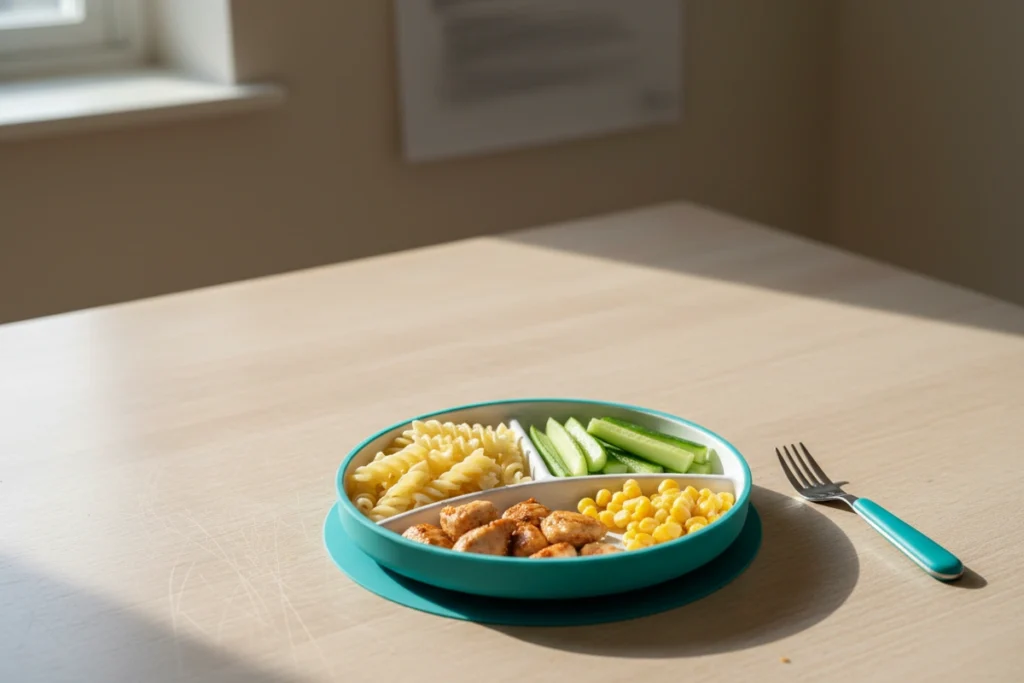
A large share of refusals are about things touching rather than about the food itself. The same chicken, rice and vegetables rejected as a stir-fry are often eaten as three separate piles.
This is the highest-value change available and it costs nothing, because it happens at the point of serving rather than the point of cooking. It also means one dinner feeds everybody — the adults get the mixed version and the child gets the components, from the same pan.
Build it into the plan rather than improvising nightly. A week where every meal deconstructs cleanly is a very different week from one where three of them are sauces.
One reliable food on every plate
Something you are confident will be eaten, present at every dinner. Plain pasta, bread and butter, a particular fruit, whatever is true in your house.
It is not a reward and it is not a fallback served afterwards. It is on the plate from the start, alongside everything else. That distinction matters more than it sounds — a plate that always contains something safe is a plate that can be approached, and approaching it is the precondition for anything else.
New food beside, not on
Anything unfamiliar goes on the plate in a small quantity, next to the rest, with no expectation attached and nothing said about it.
The point is repeated exposure without obligation. A food that has been on the plate ten times and ignored ten times is not a failure — familiarity is doing something even when nothing is eaten, and the version where it has to be tried turns every dinner into a negotiation about one item.
No negotiating at the table
The one that is about the adults, and the one that changes the evening rather than the meal.
Three more bites, no pudding until, just try it — every one of these turns dinner into the argument, and the argument is what everybody remembers rather than the food. Decide before you sit down that there will be no negotiation tonight, and the plate is just a plate.
This is easier to hold when the first three are in place, because you already know something on the plate will be eaten. It is close to impossible when they are not.
The prompt
Rule four is worth keeping
Blending vegetables into a sauce is a legitimate thing to do and it appears in almost every plan of this kind. What is not legitimate is you not knowing which meals do it.
A child who finds out that food has been altered without being told tends to trust the next plate less, and a household dealing with a picky eater cannot afford to spend trust. Knowing which sauce has the carrot in it is also simply useful when something gets refused and you are trying to work out why.
Two unfamiliar foods a week, not seven
Rule three caps the new things deliberately. A week with something unfamiliar every night is a week of seven small confrontations, and it burns whatever goodwill the structure was building.
Two is slow. It is also about a hundred exposures a year, which is a great deal more than most households manage by trying harder — because the version that tries harder is the version that gets abandoned in March.
What to expect from this
Fewer separate meals, and calmer evenings. Those are the realistic gains and they are worth having.
What it will not do is broaden anybody’s eating quickly. That happens on its own timescale, mostly through exposure and mostly not because of anything at the table. A meal plan cannot make it faster, and a plan sold on that promise is one you will judge as failed in a month.
Keep the list of what actually got eaten. Over a couple of months it grows, and it is the input for a rotation built entirely out of things that work in your house.
The printable
The Weekly Dinner Planner has a column for what got eaten, which for this particular problem is the most valuable column on the sheet.
Questions about planning for picky eaters
Should I cook a separate meal for the picky eater?
Usually not, and the deconstructed approach is why. One pan served two ways — components separately for the child, mixed for the adults — covers a large share of refusals, because a lot of them are about things touching rather than about the food.
Is hiding vegetables in sauces a good idea?
It is a reasonable thing to do, but you should know which meals do it. A child who discovers food was altered without being told trusts the next plate less, and that is expensive. Ask the plan to tell you which sauces contain what.
How many new foods should I introduce in a week?
Two, in small amounts beside the rest of the plate and with nothing said about them. A new food every night is seven small confrontations and it burns the goodwill the structure is building. Two a week is still about a hundred exposures a year.
What if they refuse everything anyway?
That is what the reliable food on every plate is for — it means the plate can be approached and something gets eaten even on a bad night. If refusals are broad enough that meals are genuinely restricted, or there are concerns about growth, that is a conversation for a GP or health visitor rather than a prompt.
Will this make my child less picky?
Not quickly, and any plan promising otherwise is overselling. What it realistically delivers is fewer separate meals and calmer evenings. Broadening happens on its own timescale, mostly through exposure and mostly not because of anything that happens at the table.
Keep going
-

Why Your AI Meal Plans Get Repetitive by Week Two (And the Fix)
Chicken again. Four reasons the same meals keep coming back, three of which are things you control, and what to change in the prompt for each.
-

Back-to-School Dinner Sprint: 20-Minute Meals for Activity Nights
The constraint on an activity night is never the cooking. It is the twenty minutes between coming in and going back out, and four dinner shapes survive it.
-

The Lunchbox System: A Week of Kids’ Lunches in 20 Minutes
Four slots, five anchors, and a fortnight is covered. The decision gets made on Sunday instead of at ten past seven every single morning.