High-Protein Meal Plans with AI: A Week in 15 Minutes
What’s in this guide
Ask for a high-protein week and you get chicken. Chicken with rice, chicken with salad, chicken with something else, and by Thursday nobody wants to look at it.
That is not a limitation of the tool. It is what a vague request produces: chicken is the safest high-protein answer available, so an unspecific prompt lands there repeatedly. Four lines fix it.
Per meal, not per day
A daily target is easy to satisfy badly. Anything that meets it across a whole day can put most of the protein in one enormous dinner, which is technically compliant and not what anybody wanted.
A rough per-meal figure spreads it out and, more usefully, forces breakfast and lunch into the conversation — which is where most weeks are actually short, and where dinner has been quietly compensating.
Name the proteins you would actually eat again
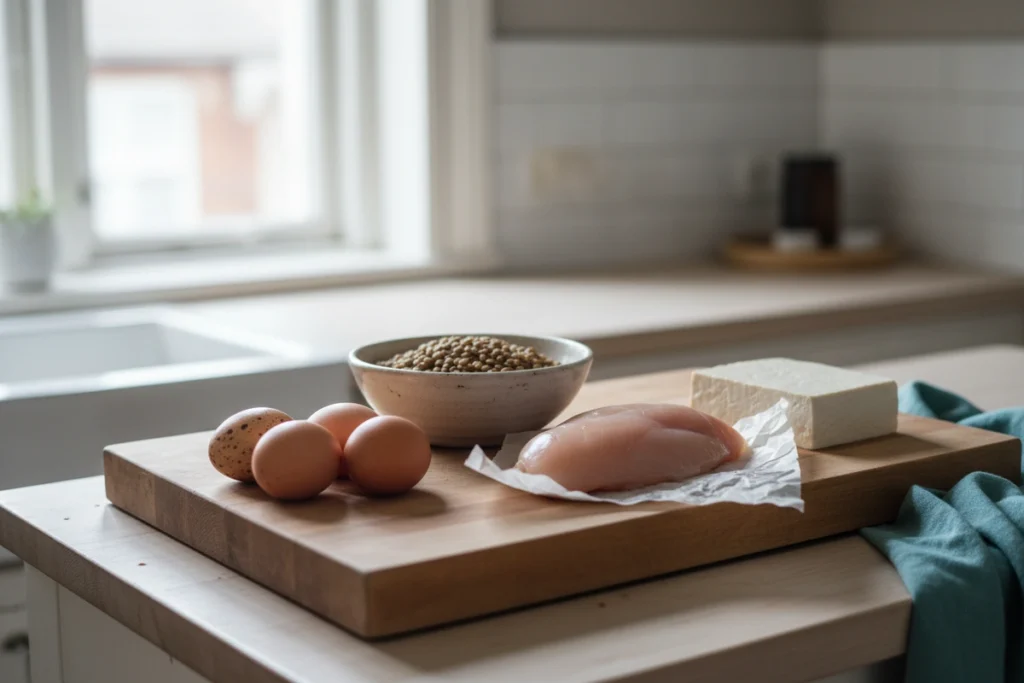
This is the line that ends the chicken problem, and it takes about twenty seconds. Write down five or six things: eggs, lentils, tinned fish, Greek yoghurt, beans, tofu, whatever is true.
Without the list it optimises for what is most commonly eaten. With it, it optimises inside your list, which is a completely different week and costs you one sentence.
The prompt
Rule four is what makes the rest checkable
Asking it to show the approximate protein per serving, and where it comes from, changes what you can do with the answer. A plan that just asserts high protein cannot be argued with. A plan that says about 30g, mostly the lentils and the yoghurt can be checked, corrected, and adjusted.
It also surfaces the meals that are carried by one ingredient. If a dinner reaches its number entirely because of a large serving of yoghurt on the side, you can see that and decide whether it is real.
The breakfast and lunch problem
Rule three asks for these to be repeatable rather than different every day, which is the opposite of what a plan usually offers and is the right answer here.
Nobody makes seven different breakfasts. Two or three that rotate get eaten; seven get abandoned by Wednesday and replaced with toast, at which point the week’s numbers stop meaning anything. Ask for two breakfasts and two lunches and use them in rotation.
This is the same principle as a dinner rotation, applied to the two meals where variety is least valued and most often prescribed.
Feeding one person differently from the rest
Usually one person in a household wants this and the others do not, which is why the first line of the prompt asks.
The workable version is one dinner with an adjustable component rather than two dinners. The same traybake with an extra portion of the protein on one plate. The same pasta with beans stirred through half of it. Add make each dinner work for the whole family, with a way to increase the protein on one plate only and it will build around that.
Two separate dinners every night is a much bigger commitment than it sounds on Sunday, and it is the version that gets abandoned first.
The printable
The Weekly Dinner Planner has seven lines for dinners and room to note the protein beside each, which is enough to see at a glance whether the week is actually built the way you asked for.
Questions about high-protein planning
Why does it keep suggesting chicken?
Because chicken is the safest high-protein answer for an unknown household, so a vague request lands there repeatedly. Listing five or six proteins you would happily eat again, and capping any one of them at twice a week, ends it in a single line.
Are the protein figures accurate?
They are approximations, and they vary with brand, cut and portion in ways it cannot see. They are good enough to compare one meal against another, which is what planning needs. They are not measurements and should not be treated as any.
Should I set a target per day or per meal?
Per meal. A daily target can be satisfied by one enormous dinner, which is technically compliant and not the point. A per-meal figure spreads it out and forces breakfast and lunch into the plan, which is usually where the week is actually short.
Can this give me a target to aim for?
No, and it should not. How much protein you need depends on your body, your activity and your health, and that number should come from a professional rather than a chat window. If you do not have one, ask for meals that are protein-forward and leave the arithmetic out.
How do I do this if only one of us wants it?
Ask for one dinner with an adjustable component rather than two separate meals — the same traybake with extra protein on one plate, or pasta with beans through half of it. Cooking twice every night is a much larger commitment than it sounds on Sunday.
Keep going
-
Why Your AI Meal Plans Get Repetitive by Week Two (And the Fix)
Chicken again. Four reasons the same meals keep coming back, three of which are things you control, and what to change in the prompt for each.
-

Back-to-School Dinner Sprint: 20-Minute Meals for Activity Nights
The constraint on an activity night is never the cooking. It is the twenty minutes between coming in and going back out, and four dinner shapes survive it.
-
AI Meal Plans for Picky Eaters (The Rotation That Ends Dinner Fights)
Four accommodations that make dinner workable, and the one that is about the adults rather than the child. Plus the prompt that builds a week around them.