The Fridge Clean-Out Prompt: Dinner from Leftovers Tonight
What’s in this guide
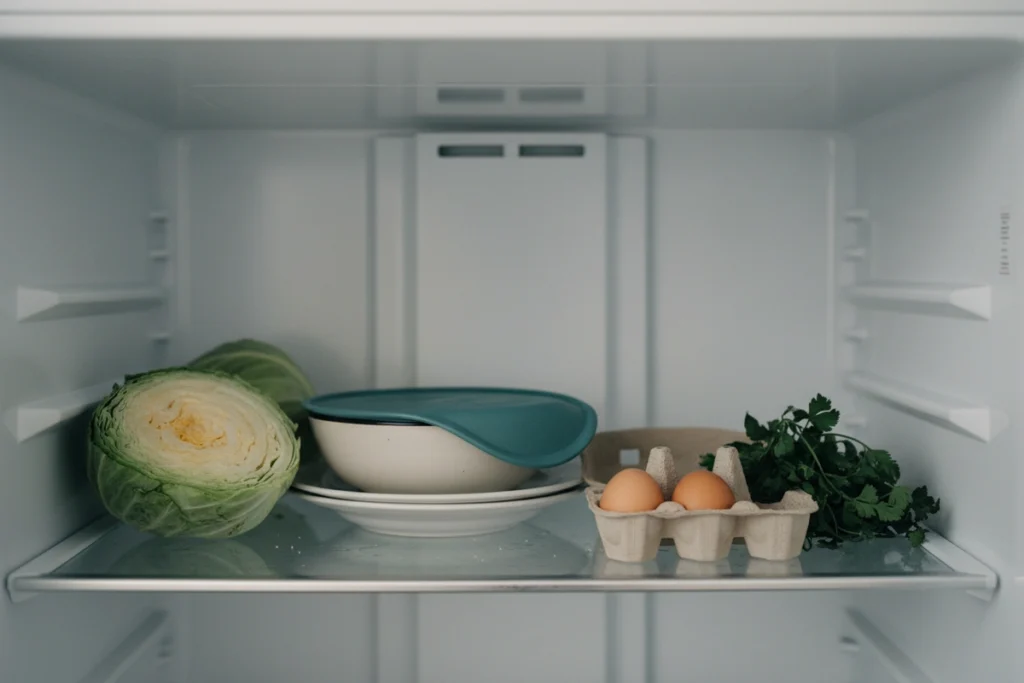
There is a specific moment this page is for: the fridge has six things in it, none of them is a meal, and two of them will not survive until tomorrow.
The instinct is to look for a recipe that uses them. That rarely works, because recipes are written forwards — ingredients to dish — and you are standing at the other end. What you need is the reverse: given these six things, what shape of dinner do they make.
The prompt
Open the fridge, read out what you see, and do not tidy the list. Half a cabbage is half a cabbage.
Rule three exists because it will not volunteer it
Asked to use six things, it will use six things. It has no way of knowing that the herbs went dark on Thursday, and it will not push back unless you have given it permission to.
Tell me honestly if something is past using is that permission. It is a small line and it prevents the version of this that ends with a dinner nobody finishes.
The four destinations
You can usually predict what it will suggest, and knowing the pattern means you can start cooking before you have finished reading.
Soft vegetables become soup or a traybake
This is the biggest category and the biggest source of waste. The reason both destinations work is the same: roasting and blending each hide texture, and texture is what actually went wrong with a bendy carrot. The flavour is fine.
Cooked grains become fried rice or a bake
Yesterday’s rice fries better than fresh rice, and leftover pasta bakes better than it reheats. This is the rare case where the leftover is genuinely the better ingredient rather than a compromise.
Cooked rice needs cooling quickly and using within a day or two, kept cold. If it has been sitting out, it goes in the bin rather than in the pan.
Odd bits of protein become a curry or a wrap
Half a pack of mince, one sausage, the end of a roast chicken. Neither is enough on its own, and both formats stretch a small amount across a full meal without it looking mean. A sauce does the same job as a wrap here.
Herbs and dairy on the turn become a sauce
Yoghurt going sharp, cream that needs using, herbs past their best. In a sauce, sharpness stops being a fault and becomes the reason it tastes of something. This is the least obvious of the four and the one most likely to surprise you.
Two options, and why not one
A clean-out dinner has a higher chance of being unappealing than a planned one, because the ingredients were chosen by what was going off rather than by anyone’s preference. One option means accept or reject. Two means choose, and choosing is easier at the end of a day.
Three is too many here — unlike the five o’clock prompt, this one is constrained by the fridge rather than by time, and beyond two the third option is usually a worse version of the second.
Doing this before the shop, not after
Most people run a clean-out when the fridge is nearly empty, which is the natural time and the wrong one. By then the soft things have already gone.
Run it the night before you shop instead. The fridge is at its most awkward — everything half-used, nothing enough for a meal — and every gram you rescue is a gram you do not buy again on the same trip. Two evenings a week doing this changes the shopping bill by more than most deliberate budgeting does, and the pantry audit is the same idea across a whole week.
The printable
The Weekly Dinner Planner has a line for what needs using up, filled in on the day you shop. Half the clean-outs never become emergencies, because the thing gets used on Thursday when it was still fine.
Questions about clearing the fridge
How do I know if something is still safe to use?
By looking and smelling, which is a judgement only you can make — nothing here can see your fridge and it is working entirely from your description. If you are unsure, throw it out. That is the cheapest decision in this article by a wide margin.
Why does it suggest soup so often?
Because blending hides texture, and texture is usually what has gone wrong with soft vegetables rather than flavour. Roasting does the same job, so if you do not want soup, ask for the traybake version of the same ingredients.
Is leftover rice safe to reheat?
It is if it was cooled quickly after cooking and kept cold, and used within a day or two. Rice that has been left standing at room temperature should go in the bin rather than the pan. Reheat it once, until it is steaming hot throughout.
What if both suggestions sound unpleasant?
That is what the last line of the prompt is for. Ask for the least-bad version and it will usually simplify rather than get more creative, which is the right direction. Sometimes the honest answer is that two of the six things should go.
When is the best time to do this?
The night before you shop, not the night the fridge is empty. That is when everything is half-used and nothing is quite a meal, and anything you rescue then is something you do not buy again on the same trip.
Keep going
-
Why Your AI Meal Plans Get Repetitive by Week Two (And the Fix)
Chicken again. Four reasons the same meals keep coming back, three of which are things you control, and what to change in the prompt for each.
-
Back-to-School Dinner Sprint: 20-Minute Meals for Activity Nights
The constraint on an activity night is never the cooking. It is the twenty minutes between coming in and going back out, and four dinner shapes survive it.
-
AI Meal Plans for Picky Eaters (The Rotation That Ends Dinner Fights)
Four accommodations that make dinner workable, and the one that is about the adults rather than the child. Plus the prompt that builds a week around them.